Research brief 01.02Starting up
The Startup Ledger: Every Line You'll Write a Cheque For
No generic article can produce a complete budget for an unseen building. Use this category map to start local bids, inspections, professional review, and contingency analysis.

Missing categories and wrong estimates can both undermine a startup budget. This article is a starting ledger of common categories, not a complete jurisdiction- or property-specific checklist. It follows the SBA's startup-cost method by separating initial and recurring costs.
Deliberately absent: dollar ranges. Your market, your building, and your scope set those, and pretending otherwise is how internet budgets fail. Each line instead tells you how to get your real figure.
1. The split that organizes everything
Start by separating initial and recurring costs while also noting mixed, variable, periodic, contingent, financing, and tax items:
- One-time: paid once to get the doors open: deposits, buildout, equipment, initial inventory, professional fees.
- Monthly: paid every month whether or not anyone books: rent, insurance, utilities baseline, software, base payroll.
Working capital before bookings ramp is a separate requirement from build-out. This site has no closure dataset showing it is the leading cause of first-year venue failure. Model it explicitly in the pre-revenue months.
2. One-time costs, line by line
| Line | What it covers | How to get your number |
|---|---|---|
| Lease deposit or acquisition | Up-front rent, security, acquisition cash, and any guarantee actually required by the negotiated documents. | The draft lease or purchase documents. Read deposit, guarantee, escalation, closing-cost, and adjustment clauses before budgeting. |
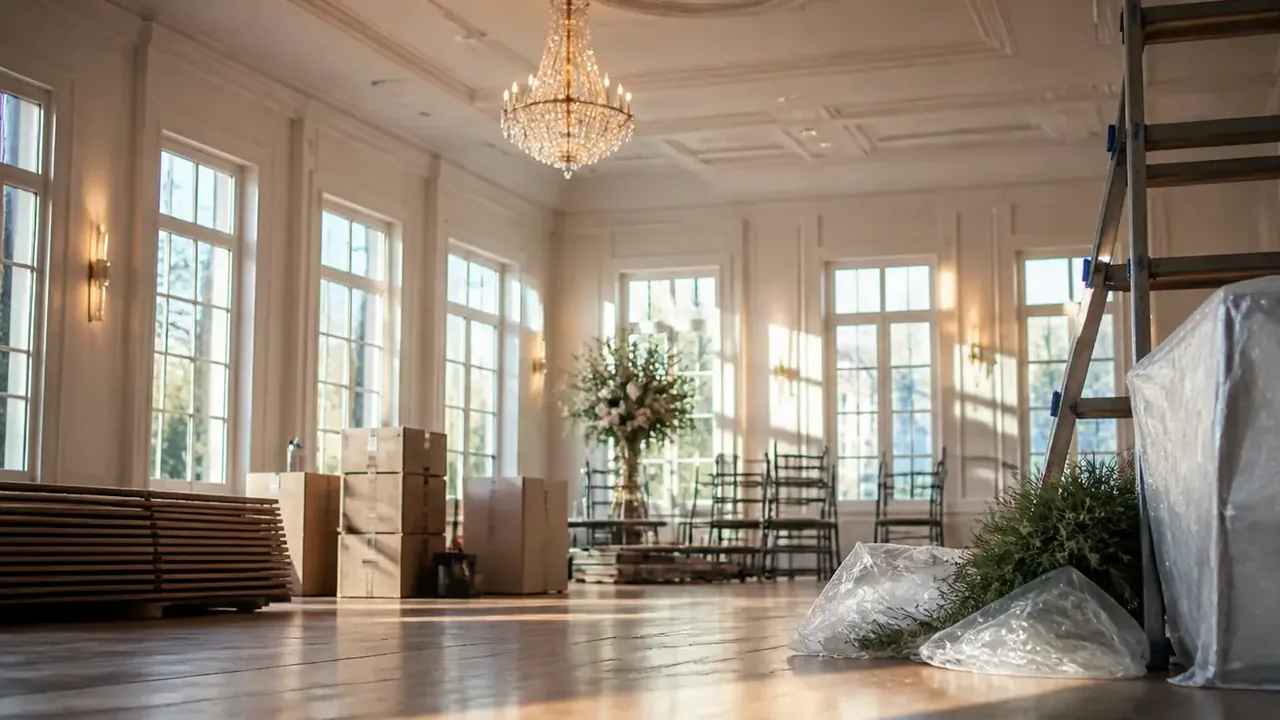
| Buildout & renovation | The swing line: flooring, restrooms sized for occupancy, accessible entrance and path of travel, HVAC sized for a crowd, electrical for catering and AV, finishes. | Two or three contractor bids on your actual building. Nothing else counts. Structure the decision with Build-Out vs. Lease. |
| Permits, licenses, professional fees | Certificate of occupancy, building and fire permits, business licensing, food-service permit, liquor licensing, plus architect, engineer, and attorney hours. | Your municipality publishes fee schedules; your professionals quote hourly. Category map in Insurance and Licensing. |
| Kitchen or prep area | The biggest scope decision on the sheet: a full commercial line with hood and walk-in versus a warming-and-plating kitchen for outside caterers. The choice cascades into ventilation, permits, and buildout. | Decide the catering model first (see the banquet hall plan), then bid that scope only. |
| Furniture & service inventory | Banquet tables, stackable chairs, cocktail rounds, service and buffet tables, plus the dollies and carts that keep setup from destroying it all. Commercial-grade only; consumer folding tables do not survive a booking calendar. | Quote your posted capacity plus a spare margin from a contract furniture supplier. Then treat it as consumable: wear economics. |
| AV, lighting, sound | Dimmable ambient lighting, house sound, screens or projection, microphones, and the wiring behind them. | Quote a phased plan: open with the minimum, expand as bookings justify. The easiest line to phase (§4). |
| Branding, photos, technology | Photography of the dressed room, a booking-focused website, marketplace listings, booking software, invoicing. | Fixed quotes from vendors. Later, judge every recurring piece by cost per booking: what a booking costs to win. |

3. The monthly ledger you fund before revenue exists
These arrive every month from lease signing onward, indifferent to your booking count:
- Rent or debt service, plus property tax and CAM charges if your lease passes them through. Read the lease; "base rent" is rarely the whole line.
- Insurance: coverage depends on operations, property, contracts, employees, jurisdiction, and policy terms. Ask a qualified broker about general liability, property, liquor, workers' compensation, business interruption, cyber, auto, and other applicable coverages before committing to a building.
- Utilities baseline: the empty-building draw: heat or cooling floor, water, alarm, internet. Separating this baseline from per-event draw is its own discipline: reading your utility bills.
- Base payroll: whoever is salaried before volume justifies it, including the salary you need to draw to live. Pricing your own labor at zero is the oldest lie in small business.
- Software, marketing, maintenance, supplies: small lines that compound; audit them per booking once you're open (the admin stack).
4. Phase what you can: never what you can't
Not every line needs full funding on day one, and phasing is how a tight budget opens a venue that a fully-loaded budget couldn't. The phasing hierarchy:
- Easiest to phase: AV and lighting. Open with house sound and ambient light; add projection and upgraded fixtures once event revenue covers them.
- Phaseable with discipline: furniture. Buy for your realistic early event size plus margin, expand toward posted capacity as larger bookings land. Keep finishes and models consistent so the second order matches the first.
- The big scope call: the kitchen. A prep-and-plating kitchen with outside caterers opens for a fraction of a full line, and many venues never need more. Upgrading later is expensive but possible; overbuilding now is capital buried forever.
- Never phase: anything tied to the certificate of occupancy, life safety, accessibility, or insurance. These aren't upgrades; they're the conditions of being open. Cutting them doesn't save money. It relocates the cost into a shutdown or a claim.
5. Working capital: the line that gets skipped
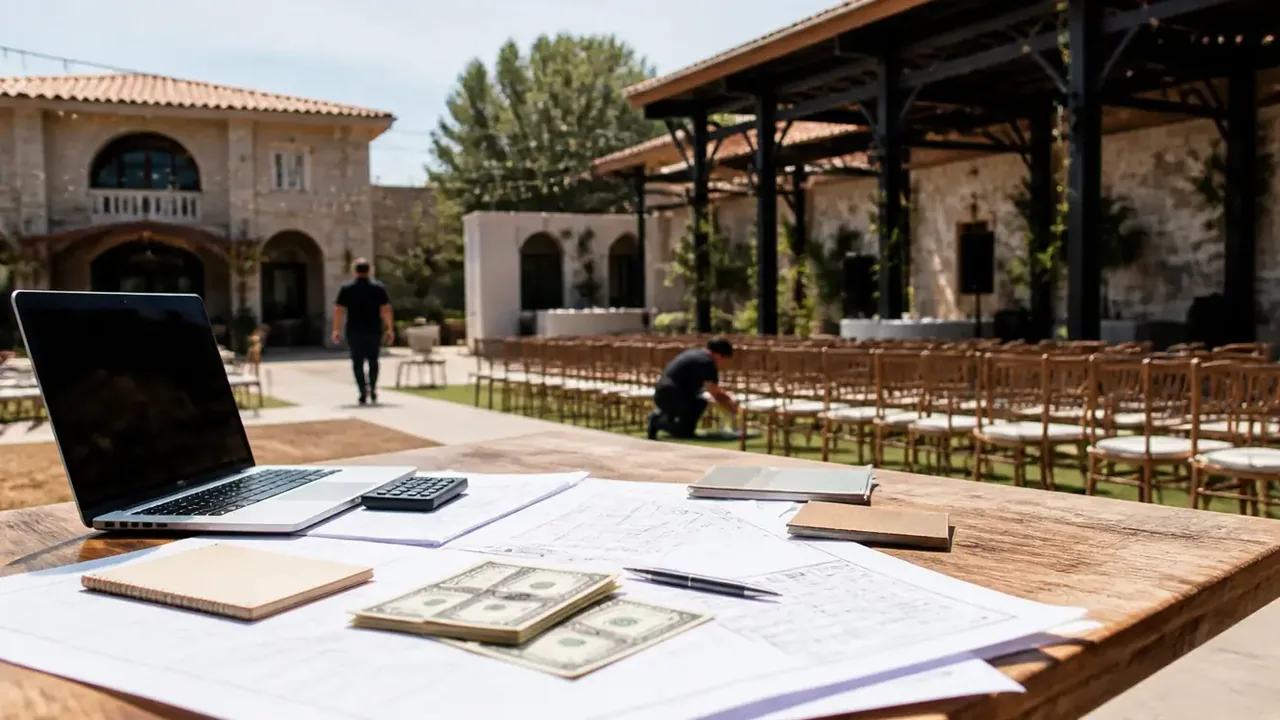
Venue revenue arrives on deposit-and-final-payment timelines and is deeply seasonal. You will pay rent, insurance, and base payroll for months before steady booking flow catches up, and the money already in the account is largely deposits for work you haven't done yet, which makes the account a liar. The working-capital line is what makes the lie survivable: a reserve sized in months of total monthly cost, funded at opening, spent only on the gap between monthly bills and earned revenue.
How many months? That's a judgment about your season and your ramp, but size it from your own monthly ledger above, not from a rule of thumb, and size it before the buildout eats it. Buildouts always volunteer to eat it.
6. A worked total (assumptions, not data)
| Line | Assumed |
|---|---|
| Lease deposit (assumed 3 months held) | $30,000 |
| Buildout (assumed from bids) | $200,000 |
| Permits & professional fees (assumed) | $12,000 |
| Prep kitchen (assumed) | $60,000 |
| Furniture inventory (assumed) | $55,000 |
| AV & lighting, phase one (assumed) | $25,000 |
| Branding, photos, tech (assumed) | $18,000 |
| Working capital: assumed $14,000/mo × 5 months | $70,000 |
| Opening total | $470,000 |
The two biggest lines are the buildout and the working capital, and only one of them is visible in the building. That structure survives even though the numbers are invented. Swing the lease-versus-buy decision or the kitchen scope and the same venue's total moves by multiples, which is exactly why the ledger has to be yours.
Carry your total forward into the funding section of your business plan, and pressure-test it against the calendar with the break-even calculator: the opening total is only rational if a realistic month of events can eventually service it.