Research brief 01.05The plan
The Banquet Hall Business Plan: You're Writing a Food Business
A banquet hall is not a bare room with a rental price. It is a food-and-beverage operation that happens to sell the room too, and a plan that leads with the rental fee tells any reader who knows the category that its author hasn't run one.
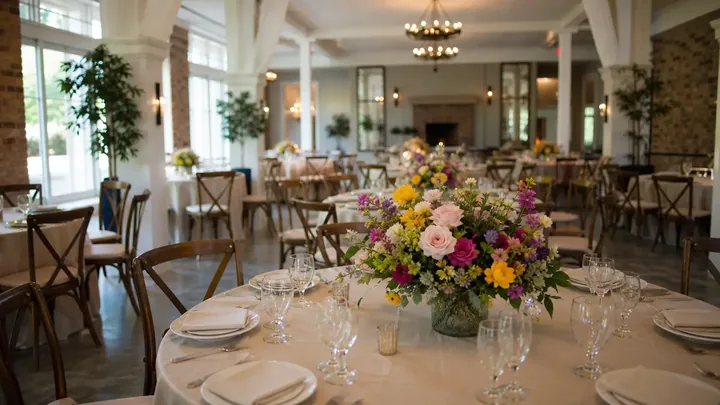
Strip a banquet hall to its economics and you find a catering company holding a lease. In a dry-hire event space, the rental fee is most of the invoice. In a full-service hall, the meal, the bar, and the service charge usually dwarf the room, which means your cost of food, your kitchen labor, and your pour cost belong in the financial section with at least as much detail as your rent. This article walks the standard SBA plan structure and shows where a banquet hall plan must diverge from a generic venue plan.
1. Executive summary: name the revenue model in the first paragraph
One page, written last. State the concept, the seated capacity your fire authority posted, the catering model, the capital ask, and the load-bearing sentence: projected events per year × average all-in revenue per event, with food and beverage as the majority of that revenue. A hall doing many mid-priced social events is a different machine from one doing a few large weddings: same building, different plan. Name which machine you're building here, and make every later section agree with it.
2. Company description: the catering decision is the plan
Define the format precisely: on-site kitchen or finishing kitchen, in-house tables and chairs, service staff on your payroll or a caterer's. Then state the single biggest lever in the document: exclusive in-house catering, an exclusive outside caterer, a preferred list, or open catering. Each step along that line trades margin for simplicity: in-house keeps the food margin and the kitchen payroll; open catering surrenders the margin and keeps a landlord's simplicity. There is no right answer, but a plan that doesn't visibly choose (and cost the choice) reads as unfinished.
3. Market analysis: count halls, not headlines
Size local demand from your own research: the halls within a realistic drive, their capacities, their published starting prices, and who they turn away. Resist the urge to paste national wedding-spend figures into this section: a national average is someone else's market, and a reviewer discounts it on sight. The credible version is a table of named-by-you-privately competitors (kept generic in the plan itself), each with capacity and price point, and a sentence about the gap you fill: the 200-seat hole between the community hall and the hotel ballroom, the underserved cultural community whose events run larger than any local room, the corporate lunch market no wedding-first venue bothers to court.
4. Organization: lenders fund operators, not rooms
A hall needs a short, specific org chart: an owner-operator or general manager, an events coordinator who details every booking, a kitchen lead if catering is in-house, and a bench of on-call servers and bartenders that scales with event size. Name the experience each key person brings, because the kitchen is where inexperience gets expensive fastest. If nobody on the chart has run food service at banquet scale, say how you're buying that experience (a hired chef-manager, a consulting caterer for year one) rather than hoping the section goes unread.
5. Service line: price streams, not events
Break the offering into its revenue streams and give each its own pricing logic: the room rental (by day-of-week and season), catering per head by menu tier, the bar (hosted, cash, or consumption, plus staffing fees), the service charge as a stated percentage of food and beverage, and the add-on catalogue. Build each price from your cost floor up, the method, and choose the structure deliberately (per-head economics demand a firm guarantee policy; a hall is the most per-head business in the trade).
6. The revenue anatomy of one banquet
| Stream | Assumed amount | Share |
|---|---|---|
| Room rental | $4,000 | 24% |
| Catering: 140 guests × $55 assumed | $7,700 | 46% |
| Bar package | $2,800 | 17% |
| Service charge: 20% assumed on F&B | $2,100 | 13% |
| Event total (pre-tax) | $16,600 | 100% |
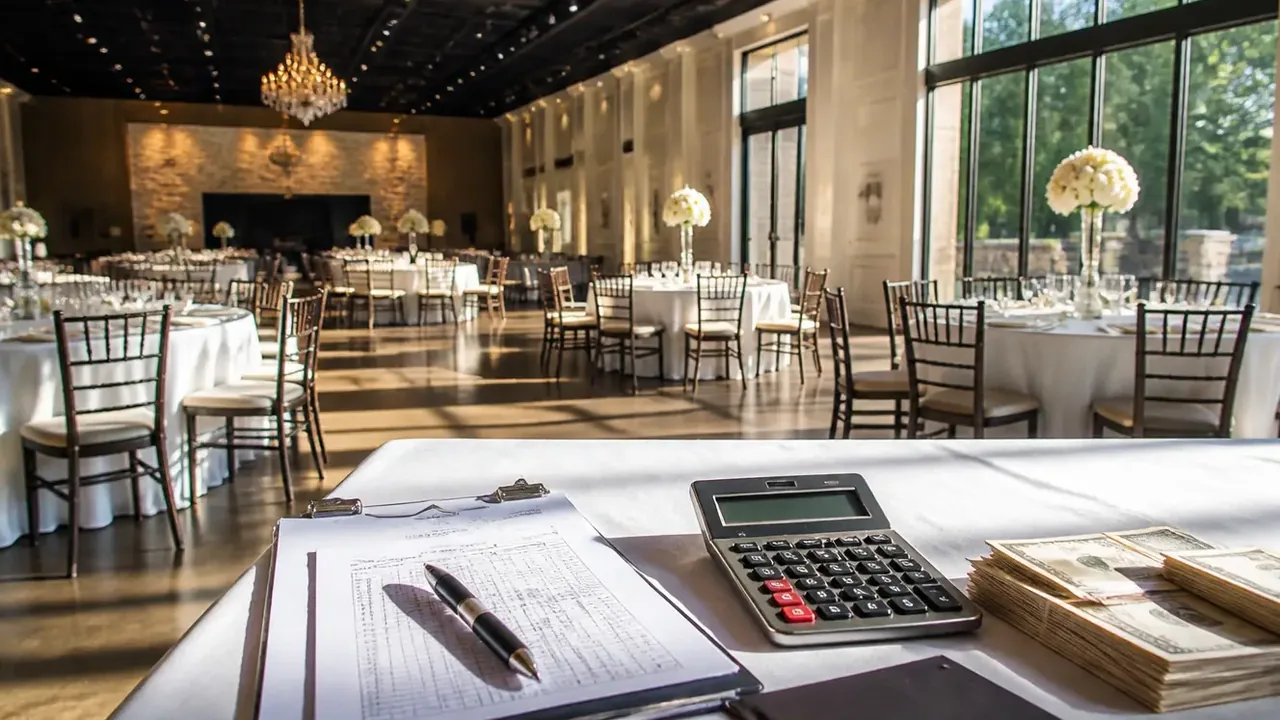
Look at what the table does: under these assumptions the room is barely a quarter of the invoice. Three-quarters of the revenue arrives with a cost of goods attached (plates of food, bottles, service hours), which a rental-fee-led plan simply doesn't model. The plan a lender believes shows this anatomy for two or three event tiers (small social, mid-size wedding, large corporate), each with its own per-head assumptions and its own contribution after food cost and event labor, using the same discipline as the per-event P&L.
7. Marketing: track cost per booked event
Banquet demand runs on referrals, tours, and marketplace listings. Budget for photography of the room dressed for service, a booking-focused website with real capacity numbers, listings, and a standing relationship program for the planners and caterers who send repeat business. Then hold the whole section to one metric: what a signed contract costs to win (the acquisition ledger), because "we'll do social media" is not a sentence a lender can underwrite.
8. Funding request and projections: the kitchen is capex too
Split the ask across build-out, kitchen equipment, furniture and smallwares, and working capital: the line-item taxonomy is in the startup ledger, and a hall's version is heavier than a dry-hire venue's in exactly two places: the kitchen and the opening inventory. Project monthly cash flow, not annual, because banquet revenue is lumpy, seasonal, and deposit-driven; the working capital that carries the quiet months is a funded line, not a hope (the pre-revenue burn comes first, then the deposit-float trap). Express break-even in events per month, the algebra, because that is the number the operator will actually live by.
9. Appendix: the documents that prove you're real
Fire-authority occupancy documentation, standard floor setups, a sample event contract, costed menus (recipes with food cost per plate), your insurance and licensing checklist, and any letters of intent from planners or corporate clients. Costed menus are the hall-specific tell: they demonstrate you know your food cost before you've served a plate.
10. A note on the service charge
The service charge deserves one honest paragraph in the plan, because reviewers ask about it and clients increasingly do too. Decide (and write down) whether it is a gratuity distributed to staff, a house fee that funds service labor generally, or a blend; whether it is taxable in your jurisdiction (treatment differs between US states and Canadian provinces. Confirm with your accountant, not a forum); and how it appears on the contract. A plan that books the entire service charge as free margin while also budgeting full service wages has quietly counted the same money twice, and that is exactly the kind of double-count a lender's spreadsheet is built to catch.
11. The three rejections, and how to not earn them
- Rental-led revenue. The room as headline and catering as footnote reads, instantly, as an author who hasn't run food. Lead with F&B.
- Borrowed demand. National spend averages pasted in as local demand. Count your actual competitors; localize everything.
- A full calendar from month one. Referral businesses ramp. A plan with no slow first year and no working capital to survive it is a plan that dies in its first winter, on schedule.