Research brief 05.01Asset economics
What Breaks First: The Wear Economics of a Venue
A venue is a machine that converts furniture, flooring, and fixtures into revenue: slowly, then suddenly. Wear is a real per-event cost whether you book it or not. Here's how to book it.

Walk into a venue in its fifth year and you can read the owner's accounting philosophy without opening a spreadsheet. Crisp rooms belong to operators who priced wear into every event from day one. Tired rooms (chipped chair frames, gray grout, a dance floor with a soft spot) belong to operators who treated replacement as a future problem. The building keeps the ledger either way. The only choice is whether you keep it too.

1. Wear is a variable cost wearing a disguise
When a chair survives an event, nothing appears in your books. But something happened: the chair moved one event closer to the dumpster. Multiply by every chair, table, linen, square foot of flooring, restroom fixture, and compressor cycle, and each event quietly consumes a measurable slice of your asset base. The disguise works because the bill arrives years later, in a lump, labeled "renovation", when it was really hundreds of small per-event costs you declined to record.
Keep the setting attached to each replacement line. The Florida indoor-and-outdoor event plan separates enclosed rooms, covered areas and ceremony seating while retaining a coordinated furniture direction.
The fix is a wear reserve: a per-event dollar amount, computed from replacement cost and honest lifespan, charged to every event's P&L and actually moved to a separate account. Not a mental note. A transfer.
2. The reserve formula
The inputs are knowable in your building even though no universal numbers exist:
- Replacement cost: what you'd actually pay to replace at commercial quality, today. Get live quotes, not the price you paid five years ago.
- Lifespan in events: the honest estimate from your own damage-triage logs (see The Turnover Hour) plus manufacturer guidance where it exists. If you're new and have no data, write down an explicit guess and revise it annually: a labeled guess self-corrects; a missing line never does.

3. The wear hierarchy: what actually breaks first
Not everything wears at the same rate, and ranking your asset classes by consumption speed tells you where the reserve concentrates. Build your own version of this table with your own quotes and logs:
| Class | How events consume it | Failure mode | Your per-event $ |
|---|---|---|---|
| Linens & soft goods | Stains, burns, tears, laundering fatigue. Consumed fastest of anything you own. | Gradual attrition: a percentage retires every event. | $____ |
| Glassware & smallwares | Outright breakage plus chipping. | Constant drip; spikes on bar-heavy events. | $____ |
| Chairs | Stacking damage, joint loosening, upholstery wear, guests tipping and dragging. | Attrition then cliff: sets become unmatchable, forcing bulk replacement. | $____ |
| Tables | Edge impacts, water damage, folding-mechanism failure. | Slow attrition, hidden by tablecloths, until a leg folds mid-reception. | $____ |
| Flooring | Heels, chair drags, spills, dance-floor point loads. | Refinish cycles (wood), replacement cycles (carpet/LVT). Big-ticket, schedulable. | $____ |
| Restrooms | Sheer traffic: fixtures, partitions, dispensers, seats. | Highest guest-visible-decay-per-dollar in the building. | $____ |
| Walls, doors, trim | Cart impacts, tape and staples, chair-back scuffing. | Cosmetic decay; repaint cycles. | $____ |
| HVAC & mechanical | Every event is peak-load runtime hours. | The lump: compressors and RTUs fail expensively and rarely at a convenient time. | $____ |
| AV & tech | Connector wear, lamp/driver hours, drops, obsolescence. | Obsolescence often beats breakage. Reserve for both. | $____ |
Two structural observations that hold across buildings: the cheap stuff fails constantly and the expensive stuff fails suddenly. Linens teach you to run a reserve; HVAC punishes you if you didn't. And the guest never sees your compressor, but they photograph your chairs. Wear on guest-visible assets is also a pricing problem: a premium rate card cannot survive tired furniture.
4. A worked illustration
A venue running 100 events a year consumes roughly $17,500 of itself annually. That figure rests entirely on the invented assumptions above. An operator who books that as a per-event cost prices correctly, funds replacement painlessly, and renovates on schedule. An operator who doesn't is enjoying a $17,500 phantom profit that the building will claw back with interest, because deferred replacement is always bought at emergency prices, at the worst time, sometimes with a booked Saturday at risk.
5. Wear-aware operations: slowing the burn
The reserve funds replacement; operations delay it. The highest-leverage habits:
- Buy commercial, not residential. Furniture rated for banquet duty costs more per unit and dramatically less per event: the denominator in the reserve formula is the number that matters. Divide price by honest lifespan-in-events before comparing anything.
- Make handling part of training. Most chair damage is stacking damage; most wall damage is cart damage. Dollies, stacking limits, corner guards, and felt pads are wear-rate levers that cost almost nothing.
- Push wear into the contract. Tape-and-staple bans, candle policies, confetti prohibitions, and a damage deposit that actually gets claimed (evidence workflow in damage triage) shift attributable wear back to the event that caused it.
- Retire in sets. Mixed-vintage chairs read as shabby even when individually fine. Plan replacement by section or room so the guest-visible standard stays uniform.
- Log everything broken. The triage log is the reserve's data feed: it converts "chairs seem to be dying faster" into a revised lifespan number and a revised per-event charge.
6. Where the reserve lives
A reserve that exists only as a spreadsheet row gets spent by the first soft month. Move real dollars to a separate account on a schedule (per event or monthly by event count). When the flooring bill arrives, it's a planned withdrawal, not a crisis. This account also quietly improves two other conversations: lenders read a funded replacement reserve as operator competence, and (if you ever sell) a buyer's inspector will price every year of deferred wear against you at settlement. The reserve is cheaper than the discount.
7. The annual wear review
Once a year, off-season, calendar blocked, reconcile the theory with the building:
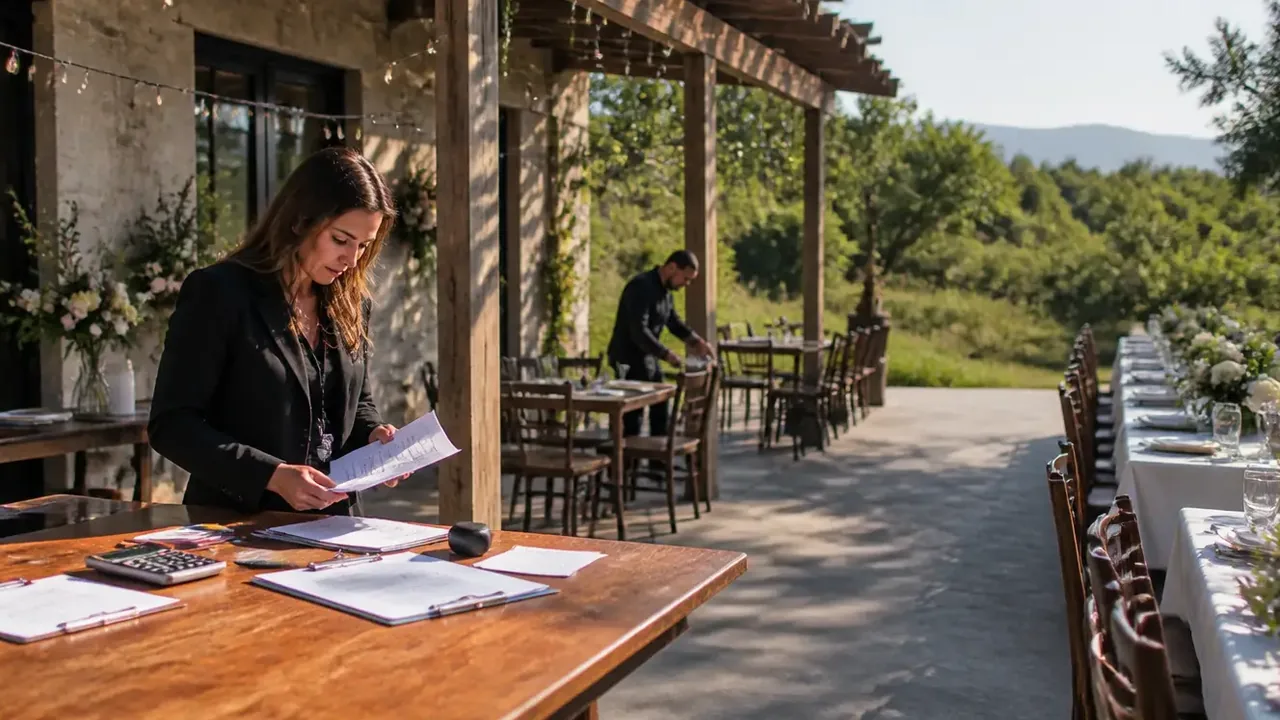
Adapt Guest Room Standard's room-condition audit method to document furniture condition, photographs and replacement priorities during the venue's annual wear review.
- Recount the assets. Physical inventory against the schedule: chairs, tables, linens by grade, AV by unit. Shrinkage and "where did the sixth cart go" are wear costs too.
- Re-quote replacement costs. Prices move; a reserve calibrated to old quotes under-funds silently. Update the numerators.
- Recompute lifespans from the triage log. If chairs are retiring after fewer events than you assumed, the denominator shrinks and the per-event charge rises. That's not bad news. That's the system working. The bad news is the version you don't find out about.
- Compare reserve balance to the coming cycle. List what the schedule says should need replacement in the next two years and check the account can cover it. A funded gap is a plan; an unfunded one is a pricing decision you now get to make calmly, a year early.
The review usually takes one honest day. It is the difference between a venue that ages on purpose and one that ages by surprise.