Research brief 01.03The plan
The Event Venue Business Plan a Lender Will Actually Read
A flexible venue's plan lives or dies on one assumption, utilization, and most plans bury it. Here's the structure lenders expect, with the load-bearing numbers put where a reviewer can find them in thirty seconds.
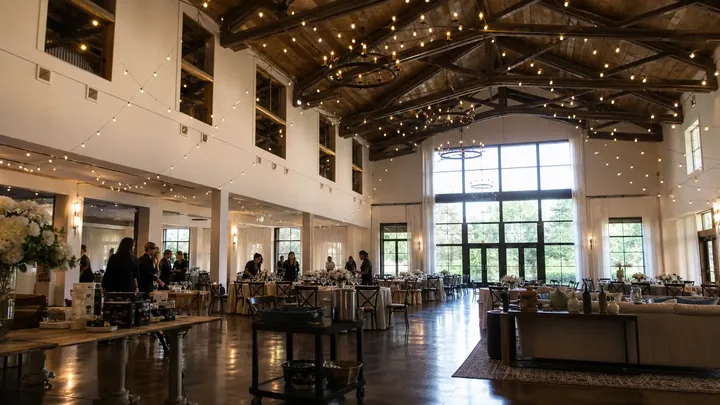
A plan for a flexible event space (corporate meetings by day, galas and milestone parties by night, the occasional wedding) is a different document from a wedding-venue plan. The upside is diversification: you are not living and dying on peak-season Saturdays. The price of that upside is complexity: you're selling to several buyer types at once, each with its own price sensitivity, lead time, and season. The plan's job is to prove you understand that complexity in numbers, not adjectives.
Use the SBA's standard plan structure. Lenders read dozens of these, and a familiar skeleton lets them find your numbers fast. What follows is what to load into each section for a mixed book.

1. Executive summary: lead with utilization
One page, written last. Concept, location, legal capacity, target event mix, events per year, average revenue per event, capital requested. But the number to lead with, the one that defines a flexible venue, is utilization: how many of your sellable booking slots you actually fill. A room that can host a daytime session and an evening event has two slots a day; a wedding-only room has one Saturday a week. Your whole competitive argument is that you'll sell slots the single-format venue can't. Say so with a number, on page one.
2. Company description: the room as a convertible asset
Describe how the space converts and the cost of each flip (the turnover hour). State legal structure, ownership, approved uses, and the occupant load established for the premises by the authority having jurisdiction under the locally adopted code. Do not infer a sellable capacity from room area or a generic model-code table alone. Name the food-and-beverage model because it reshapes the revenue and cost lines.

3. Market analysis: demand by buyer type, day, and season
- Corporate: companies, associations, training firms. Weekday-driven, less price-sensitive, repeat bookers with short lead times.
- Social: weddings, milestones, reunions, fundraisers. Weekend-driven, emotion-led, long lead times.
- Competition: hotels, dedicated venues, restaurants with event rooms, coworking spaces with meeting rooms. List their capacities and published starting rates: real names, real prices, from your own research.
The map that matters is demand by day-of-week and season. A strong plan shows corporate weekday bookings smoothing the social weekend peaks, so the room isn't idle Monday through Thursday. A weak plan shows a total addressable market and hopes.
4. Services and the rate card
Flexible venues sell more granularly than wedding venues: hourly corporate blocks, full-day conferences, evening socials, full buyouts. Your rate card should show the structure (which pricing model applies to which booking type, see per-hour, flat, or per-head) with rates built from your own cost floor (the four-layer method). Do not import another venue's rates into your plan; a reviewer who asks "why this number?" should get an answer that starts with your costs, not your neighbor's.

5. Revenue model: every stream, and who buys it
- Rental fees: hourly, flat, and buyout
- Food-and-beverage margin or caterer commission
- Bar service
- AV and technology rental, typically strongest with corporate clients
- Add-ons: staging, upgraded furniture, coordination, cleaning (where the margin actually lives)
- Vendor referral arrangements, where your disclosure practices and jurisdiction allow
The strategic sentence a lender wants to see: no single stream or season carries the business. Then prove it in the projections.
6. Financial projections: bottom-up, with the assumptions labeled
Three to five years, built from event counts × average revenue by type, never from a market-share percentage. A worked shape:
| Line | Amount |
|---|---|
| Corporate bookings: 90 assumed × $2,200 assumed avg | $198,000 |
| Social bookings: 45 assumed × $6,500 assumed avg | $292,500 |
| Projected revenue | $490,500 |
| Variable costs: assumed 35% of revenue | −$171,675 |
| Fixed costs: assumed | −$250,000 |
| Operating profit | $68,825 |
Two things make this table credible to a reviewer. First, the event counts trace to a calendar: 135 event-days against the room's realistic slot inventory, leaving visible headroom. Second, break-even is stated in the operator's unit, events per month, not as a revenue figure floating free of the calendar.
7. Funding request: every dollar tied to a line
Total capital, your contribution, and the split across buildout, furniture and equipment, AV, working capital, and reserve, each traced to the startup ledger. Round numbers with no backup read as guesses, because they are.
8. Operations and compliance, briefly but completely
Booking and contract flow, deposit and cancellation terms, event-day staffing structure, and the turnaround plan between same-day bookings. Compliance: certificate of occupancy, business and tax registration, health and liquor permits, fire sign-off with posted load, accessibility, and certificates of insurance from outside vendors. The category map is here.
9. The utilization section: make the hero assumption defend itself
Give utilization its own section, because it's the number the whole document stands on. Define the slot inventory (dayparts × days × weeks), state the sold percentage you're projecting by daypart and day-of-week, and show the ramp: which quarters lift midweek and daytime utilization, and what marketing or pricing action drives each lift. A venue running strong weekend evenings and empty weekday mornings isn't full. It's a corporate-sales problem wearing a success costume. The measurement discipline is in Utilization: The One Ratio That Grades Your Calendar.
10. Risks: show the math on your worst realistic year
Name the core assumptions (event count by type, average revenue per event, utilization) and stress each. The classic mixed-book risks: a soft corporate market in a downturn, over-reliance on weekend social bookings, and underpricing midweek slots just to see them filled. Then write the downside case in full sentences: if corporate bookings land at 60 instead of 90, the social calendar still carries the venue past break-even, or it doesn't, and here is the cost action that follows. A plan that shows its worst realistic year is more fundable than one that only shows its best, because it reads like it was written by someone who'll still be operating in that year.
Finally, keep the document honest about what it is: a set of labeled assumptions arranged so a stranger can audit them. Lenders do not expect a first-time operator to predict the future; they expect the assumptions to be visible, the arithmetic between them to be checkable, and the downside case to be written by the same hand as the upside. A plan that survives its own bad quarter on paper (stated plainly, with the action that follows) outreads a confident plan every time, because the reader's real question was never "will the good case happen?" It was "what does this person do when it doesn't?"