Research brief 04.01Operations
The Turnover Hour: What Happens Between Events
The most expensive hour in your venue has no client in the room. Turnover is where labor cost hides, where back-to-back bookings fail, and where overtime clauses earn their keep.

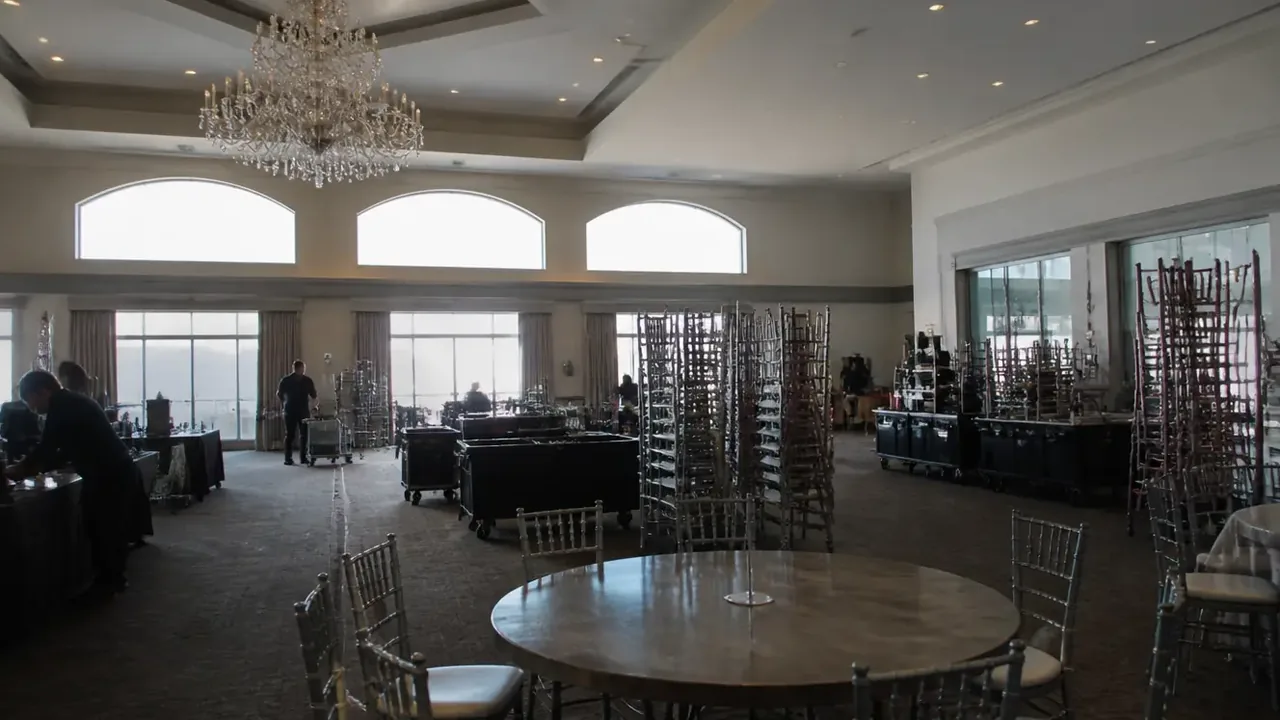
Every operator obsesses over the event. Few obsess over the seam between events, and the seam is where money leaks. Turnover is a production process: teardown, waste-out, clean, repair triage, room flip, and setup for the next contract, executed by hourly labor against a deadline someone else signed. Treat it with the same rigor as the event itself and three things improve at once: labor cost, damage detection, and your confidence selling back-to-back dates.

1. Decompose the turnover
"Cleanup" is not a line item; it's a bundle hiding six distinct jobs. Time them separately, because they scale differently:
The room reset starts with where each furniture group belongs. The New Jersey ceremony, reception and lounge plan separates the spaces through a complete event day so the changeover can be planned around a concrete furniture list.
| Phase | What it includes | Scales with | Your mins |
|---|---|---|---|
| 1. Client vacate | Getting the previous client's people, vendors, and property actually out. The least controllable phase. | Contract discipline | ____ |
| 2. Teardown | Strip linens, break down tables and chairs, collapse staging, pull décor and tape. | Guest count & setup complexity | ____ |
| 3. Waste-out | Trash, recycling, bottle disposal, lost-and-found sweep. | Catering style (plated vs. buffet vs. bar-heavy) | ____ |
| 4. Clean | Floors, restrooms, kitchen/back-of-house, glass, spot-treatment. | Floor area & event intensity | ____ |
| 5. Damage triage | Walk the room against a checklist; photograph anything broken, stained, or missing while it's attributable. | Checklist quality | ____ |
| 6. Reset/setup | Next event's floor plan: tables, chairs, AV, signage, climate pre-set. | Next contract's complexity | ____ |
Time all six phases across a handful of real events and you'll have the most useful operations document in the building: your turnover curve: minutes and labor-hours as a function of event type. Everything else in this article is built on it.
2. The cost of a turn
This number belongs on the per-event P&L as part of variable cost, but computing it standalone changes decisions. A few places it bites:
- Setup-change requests. "Can we flip from ceremony rows to reception rounds mid-event?" is a paid mini-turnover. Price it from the curve: crew size × minutes × rate, plus margin.
- Event-type mix. Two events with equal rental fees but different turn costs are not equal bookings. Bar-heavy events with confetti are famous in every operator's ledger for a reason.
- Client-cleans discounts. Some venues let clients handle defined cleanup tasks for a lower rate. Specify the scope, inspect the result, and use your turn log to measure which labor and disposal costs actually disappear before setting the discount.

3. Back-to-back bookings: the seam under load
Multi-block Saturdays (the honest way to manufacture premium inventory) put the turnover on a countdown clock. The design questions:
- How long is your worst realistic turn, not your best? Schedule the gap to the worst credible case for the event types involved. A gap sized to the best case fails exactly when the day matters most.
- What absorbs an overrun? The morning client running 40 minutes long consumes your slack. Your defenses, in order: a vacate time with teeth in the contract, staff empowered to start teardown at the contracted minute, and an overtime rate priced to deter rather than compensate.
- Can the crew scale? A turn that takes 3 people 2 hours may take 6 people just over 1. Many phases parallelize well. Know which phases in your building do (teardown, setup) and which don't (a single floor scrubber, one loading dock).
4. The damage-triage phase deserves its own paragraph
Prompt inspection and documentation can strengthen a damage claim, but it does not by itself prove responsibility or make a charge enforceable. Compare check-in and check-out records, contract terms, invoices, and applicable law before withholding or billing. A one-page checklist and exception photos also provide useful data for the wear reserve.

5. Scheduling and staffing the turn
- Standardize the flip. A laminated floor-plan card (or taped floor marks) for each standard layout cuts setup time and, more importantly, cuts the variance that makes back-to-backs scary.
- Stage the reset. Carts pre-loaded with next event's linens and signage before the current event ends. The turn should start with materials in position, not with a trip to storage.
- Separate the clean from the flip when you can. Overnight cleaning after an evening event, setup crew in the morning: a longer wall-clock turn at lower stress and often lower cost than one crew doing everything at 1am at overtime rates.
- Track turns like events. Date, event type, crew size, minutes, incidents. A dozen rows in, patterns appear; fifty rows in, you can quote back-to-backs with confidence instead of fear.
6. The turnover kit and the turn log
Two cheap artifacts convert turnover from folklore into a system:
The kit. A dedicated, staged set of tools that never leaves the building and never gets borrowed thin: floor-plan cards for every standard layout, pre-labeled bins for lost-and-found and client property, the damage-triage checklist on a clipboard (or a phone form), spare casters and glides, gaff tape, and the cleaning cart loaded to a photo-documented standard. Every minute a crew member spends hunting for a squeegee at 11pm is a minute of loaded labor rate spent on nothing.
The log. One row per turn: date, event type, guest count, crew size, start/end time per phase, incidents, damage found. Ten minutes of clerk work per event buys you three expensive answers: what a turn really costs by event type (feeding the per-event P&L), how much slack a back-to-back Saturday truly needs, and which event formats are quietly chewing the building (feeding the wear reserve).
7. The handoff walkthroughs
Bracket every event with two short, scripted walkthroughs. Check-in: walk the room with the client's responsible person, note pre-existing conditions, confirm the vacate time out loud, and point at the clock when you do it. Check-out: walk the same route, checklist in hand, before their vendors leave the parking lot. The pair takes fifteen minutes total and eliminates the two most expensive sentences in venue operations: "that was already broken" and "nobody told us we had to be out by ten."
8. When to outsource the turn
At some event volume, a cleaning contractor's fixed per-turn rate beats managing your own late-night crew, and at some other volume, it stops beating it. The comparison is straightforward once you have the turn log: contractor rate versus your measured labor-hours at loaded cost, plus the scheduling risk of each. Contractors bring predictable pricing and no payroll admin; in-house crews bring flexibility on timing, better damage triage (they know the building), and the ability to fold setup into the same shift. Many venues land on a hybrid: contractor for the deep clean, in-house for teardown, triage, and reset. Whatever you choose, choose it from the log's numbers, not from whichever 1am was most recently miserable.