Research brief 05.03The sinking fund
The Replacement Reserve: Funding FF&E Before It Fails
Every chair in your building is quietly becoming a future invoice. The replacement reserve is just agreeing to read the countdown and fund it monthly: instead of meeting it all at once, surprised, in your worst quarter.

The wear article established that events consume the building in fractional, per-use increments. This article is the funding mechanism that catches those fractions: the replacement reserve: a sinking fund built from a lifecycle ledger of everything you own, so that FF&E replacement becomes a scheduled transfer instead of a recurring emergency. It is the least glamorous account in the venue and, by year five, frequently the difference between a room that still books and a room that reviews as "tired."
1. The lifecycle ledger: every asset gets three numbers
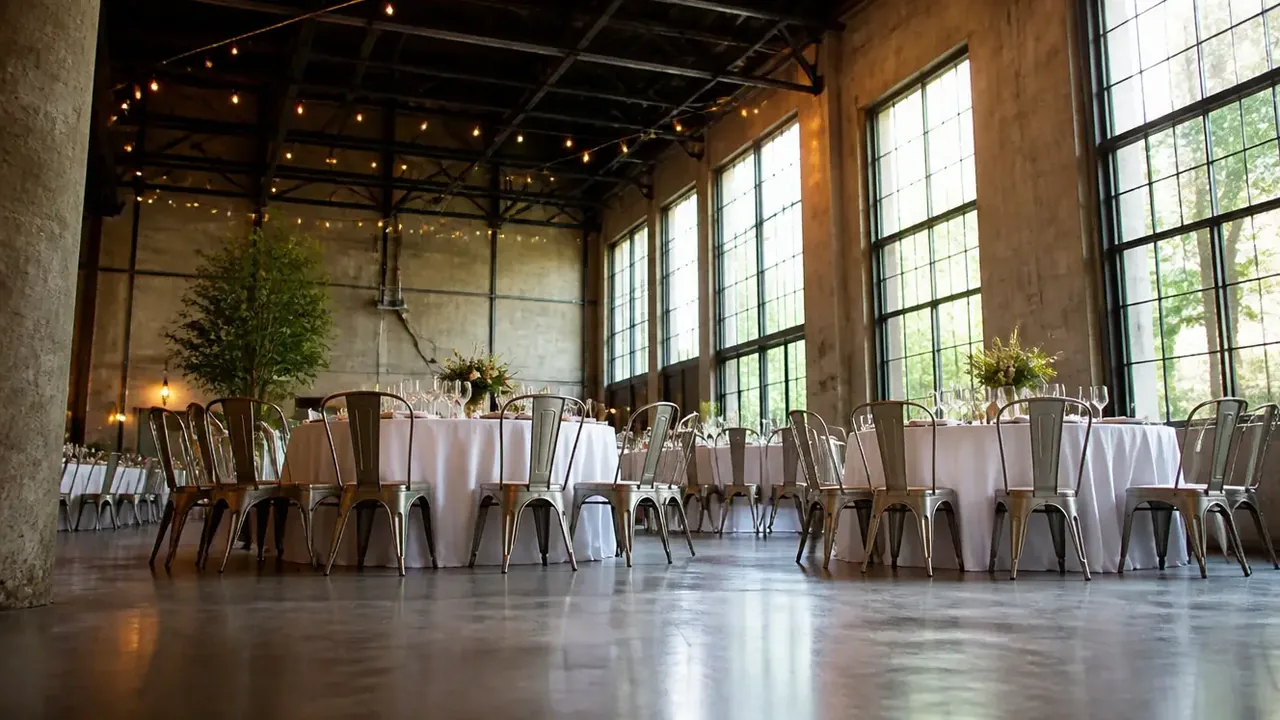
Walk the building once with a spreadsheet and give every asset class three entries: replacement cost (today's price to replace the fleet, not what you paid), expected service life in your actual duty cycle (a chair's life is measured in events, not years. A hundred-event year ages furniture faster than a forty-event year, which is the whole point of thinking per-use), and age or condition now. Group sensibly ("banquet chairs ×200" is one row, not two hundred) and include the classes operators forget: linens (a consumable pretending to be an asset), AV and cabling, kitchen smallwares, the portable bar, décor and lighting, office and cleaning equipment. The building's own big systems (roof, HVAC, lot) are deliberately excluded here; their five-figure economics get their own treatment in the mechanical-capex article. This ledger is the fleet of things events touch.
Connect the replacement allowance to the actual room inventory. The Pennsylvania venue refresh plan considers retained character and working routes; the state event-furniture directory provides other project briefs for turning an allowance into a purchasing list.
2. From ledger to monthly number
This is a planning allocation, not book depreciation, tax depreciation, or a prediction that an asset will fail on schedule. Update it with condition inspections, actual use, repair history, vendor guidance, and current replacement quotes.

Put the replacement allowance against an actual item list
Build the reserve from the furniture list so every input can be challenged. This worked example uses USD planning costs and assumed service periods. Replace both with current proposals and your own condition records before adopting a funding amount.
| Furniture | Qty | Unit input | Service years | Replacement total | Annual allowance |
|---|---|---|---|---|---|
| Banquet chairs | 200 | $85 | 5 | $17,000 | $3,400 |
| Banquet tables | 24 | $180 | 8 | $4,320 | $540 |
| Lounge chairs | 8 | $450 | 6 | $3,600 | $600 |
The furniture replacement total is $24,920. Spreading each group over its own assumed service period produces $4,540 per year, or $378.33 per month. At 80 events a year, the allowance is $56.75 per event. Keep annual funding visible when bookings change: at 50 events, the same annual amount becomes $90.80 per event.
| Chair service years | Whole-fleet annual allowance | At 80 events |
|---|---|---|
| 3 | $6,806.67 | $85.08 |
| 5 | $4,540.00 | $56.75 |
| 7 | $3,568.57 | $44.61 |
The table and lounge assumptions stay fixed in that comparison. A three-year chair cycle raises annual funding to $6,806.67; a seven-year cycle lowers it to $3,568.57. Use repair frequency, upholstery condition and your actual event handling to review the assumption. A supplier warranty term alone does not establish the replacement date.
For furniture already partway through its service period, compare the reserve already accumulated with the next expected replacement bill. Price increases and a catch-up contribution belong on separate lines so a shortfall cannot disappear inside a longer lifespan assumption.
3. Where the money sits, and what counts as spending it
A separate reserve balance is one practical control, subject to the venue's banking, financing, and accounting arrangements. If it is part of the operating plan, include the planned cash transfer among the obligations tested in the cash break-even model. Define eligible uses, document withdrawals, update the asset ledger after replacement, and refresh costs and service-life estimates from current evidence.

4. Buying grade: the ledger prices durability honestly
The lifecycle ledger prices durability in cost per year or per use, not sticker price. Include expected life, repair and labor costs, appearance, storage, financing, and disposal, not price and life alone. If heavier use shortens measured service life, update the ledger from inspection and repair evidence; do not assume wear scales perfectly with event count.
5. Staggering: the fleet trick that flattens the curve
One scheduling refinement pays for the whole article: never let a large asset class synchronize. A chair fleet bought in one order retires in one invoice, and, worse, ages in unison, so the room's whole seating look degrades together. The staggered alternative replaces a fraction of the fleet on a rotation (a quarter of the chairs every eighteen months, a third of the linens every rotation cycle), which converts the class's occasional five-figure spike into a level, budgetable line, keeps average condition perpetually mid-life instead of oscillating between showroom and shabby, and gives you a standing quality audit: each replacement tranche is a chance to notice that the model you bought five years ago is no longer the model you'd choose. Staggering also softens the ledger's estimation risk: a service-life guess that proves wrong by a year moves a tranche, not the fleet. The candidates are any class bought in multiples: seating, tables, linens, place settings, uplights; the singletons (the sound board, the ice machine) can't stagger, which is exactly why their rows deserve the more conservative life estimates.
6. The failure mode this account prevents
An unfunded replacement becomes an emergency. It forces an unplanned purchase, a repair, a financing decision, or a cut in service. The illustrative $945 is not a universal requirement or guaranteed forecast; the useful discipline is to estimate the venue's own replacements, test the funding plan against cash constraints, and update it as actual condition data arrives. The refresh-cycle article extends the same planning logic to appearance as well as function.
If the full ledger feels heavy for a first pass, start with the three classes clients touch most (seating, linens, AV) and let the walk expand next quarter. An imperfect reserve funding the obvious rows beats a perfect plan that never opened the spreadsheet.