Research brief 05.30Changeover budget
Price the Dates a Furniture Changeover Would Block
A quiet-looking week can still be the costly choice. Price the changeover work and the events it would actually prevent before reserving the dates.
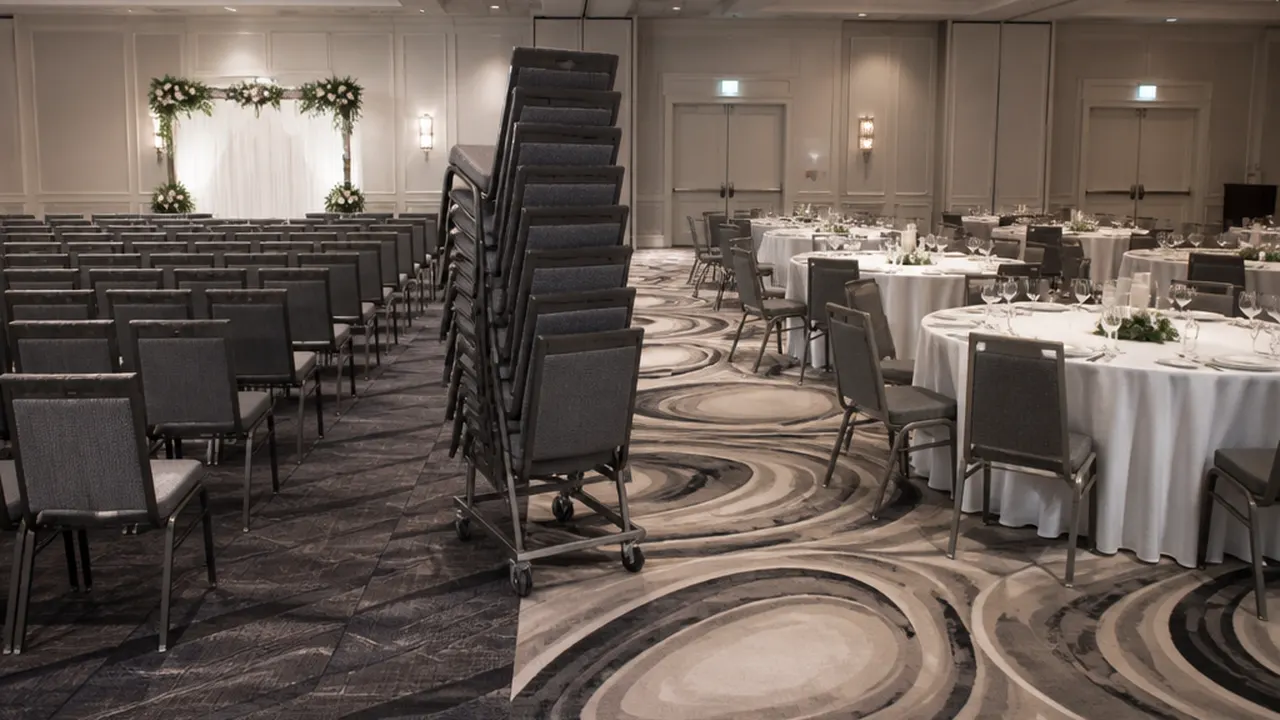
You have a furniture quote and two possible changeover windows. One is cheaper for the installation team. The other leaves more of your event calendar available. To choose between them, compare the additional work costs with the contribution from events each window could prevent.
Start with windows your operations team can actually release. An existing booking is a commitment to resolve through its agreed terms and the responsible people, not a date to erase because another week looks cheaper. This comparison is for choosing among workable windows before you make new commitments.
Block the whole changeover, not just truck day
Ask the supplier and installation team to separate arrival, receiving, inspection, assembly, placement and the point when the room can return to event use. Include removal of the old furniture and the work your team needs before it can set the next event. A delivery estimate does not tell you how long those steps will take.
Receiving scope can change the schedule. MityLite's delivery instructions, for example, distinguish liftgate unloading from carrying furniture inside, unpacking and assembly. Confirm the services in your own offer and who does the remaining work.
Draw each proposed window on the calendar from the first room or route you must take out of use to the approved return to service. Check other rooms too: sharing an unloading entrance or receiving area may restrict an event outside the room being refurnished. Have the people responsible for site safety and operations confirm whether each arrangement works.
Record the readiness check and a fallback decision date. If delivery or inspection slips, the calendar needs an updated availability decision. Do not sell an event on the assumption that unresolved furniture will be ready.
Price only the spending that changes
Put each workable window beside the same furniture scope. If the purchase price is identical, it does not decide which week is cheaper. Compare the future costs that differ, following the relevant-cost approach described in OpenStax's managerial accounting guide.
Ask for any difference in delivery appointments, installation, extra paid labor, temporary storage, removal and separately confirmed temporary furniture. Keep unpriced items visible. An earlier arrival that requires paid storage may cost more than the freight line suggests.
Use the actual payroll or contractor change for labor. Hours rearranged within an unchanged paid schedule still need an operational plan, but they are not automatically extra cash spending. The turnover hour guide can help your team measure room work before estimating the changeover.
Estimate the events you would actually lose
A blocked date is not automatically a lost sale. Review the inquiry and booking records for each window. Identify demand the venue could otherwise serve, at a stated offer, on those dates. Check whether another suitable room or a date acceptable to the client would preserve the booking.
For a genuinely displaced event, estimate contribution as event revenue less the event costs you would avoid by not hosting it. The per-event P&L guide helps identify those costs. Do not use the full rental fee as the loss while also claiming the labor and cleaning bills you would no longer pay.
Separate confirmed facts from forecast demand. An uncontracted inquiry may not become a booking even if the room stays open. Show a range that includes no lost booking when that remains possible. Last year's occupancy on the same week can inform the discussion, but it is not proof that this year's dates would sell.
Keep refunds, relocation costs or other effects of an existing commitment in a separate, specifically reviewed case. The simple unbooked-calendar comparison below does not cover them.
A worked choice between two windows
Window A has $1,800 of additional changeover cash costs. Window B has $3,200, because its confirmed work arrangement costs more. In this example, B does not displace other demand. A overlaps two uncontracted inquiries that could not be served elsewhere or shifted if they booked:
- Inquiry 1: $3,600 event revenue less $2,400 in avoidable event costs, leaving $1,200 contribution.
- Inquiry 2: $2,500 event revenue less $1,600 in avoidable event costs, leaving $900 contribution.
Foregone contribution is what the displaced events would have left after their avoidable costs. It is the alternative the window gives up, not another bill for the changeover. Keep the actual work payments and their due dates in a separate cash budget.
Scroll to view all columns.
| Demand actually displaced by A | A: changeover cash plus foregone contribution | B: changeover cash plus foregone contribution | Lower combined cost |
|---|---|---|---|
| Neither inquiry | $1,800 | $3,200 | A by $1,400 |
| Inquiry 2 only | $2,700 | $3,200 | A by $500 |
| Inquiry 1 only | $3,000 | $3,200 | A by $200 |
| Both inquiries | $3,900 | $3,200 | B by $700 |
The difference in changeover spending is $1,400. Paying that extra amount for B is justified on this narrow cost comparison only if A would forgo more than $1,400 of contribution and B would preserve it. If both inquiries were otherwise won, the assumed $2,100 of preserved contribution exceeds the extra fee by $700. If neither booked, A remains cheaper.
This does not assign a probability to either inquiry. Ask the sales team what evidence supports each case before choosing. If B also displaces demand, add its foregone contribution and recalculate the difference.
Set a limit before asking for a different offer
Once the comparison is credible, you can tell the supplier what a revised delivery or work arrangement would need to achieve. Under the both-inquiries case above, an arrangement that preserves those events could add up to $2,100 to A's cost before reaching the same combined cost. That is a ceiling under stated assumptions, not a suggested fee or permission to spend it.
Test a delay as well. Extend the proposed closure to the next genuinely affected event and update its contribution and any additional costs. A window with a small quoted saving may become unattractive if a plausible slip reaches a booking you cannot move. Read the calendar scarcity guide for the wider role of those dates in the venue's year.
Bring the workable dates, blackout periods, receiving constraints and readiness requirements into your venue furniture inquiry. Ask what arrangements can be quoted and confirmed. The useful decision pairs a funded work plan with a calendar you can honor, rather than treating the cheapest installation line as the cheapest changeover.